Recreational catch FAQs
All FAQs |
Customary Fisheries | Fisheries Management | maximum sustainable yield | QMS | Economics | Fishing | Rescue Fish | Environment | Fishing methods | Recreational Fishing | Fishcare | customary | Kahawai | Reform scam | Baitfish | Scallops | Crayfish | WRC decision | Marlin | Reef fish | Deemed value penalties | Judicial Review | Kill the Bill | Tarakihi | Release mortality | Election | Politics | Bottom trawling
 February 5, 2018
Crayfish stocks are in crisis and recreational fishers are calling for an independent review of the fisheries management system. Currently, crayfish in the CRA 2 region (which extends from Pakiri through the Hauraki Gulf to the East Cape) are at an all-time low. The latest official assessment shows that the crayfish population has been in ... Read more.
 January 24, 2018
Minister’s crayfish decision Stuart Nash, Minister of Fisheries, has announced there will be commercial catch reductions in two crayfish stocks including CRA 2, from April 1st 2018. There will also be commercial catch increases for the Wellington-Hawke’s Bay region (CRA 4) and the Southern – Fiordland (CRA 8) fish stock. Recreational fishers did not support ... Read more.
 January 20, 2018
LegaSea is pleased that the Minister Stuart Nash has agreed to review the crayfish fishery on the northeast coast after years of lobbying by thousands of individuals, the New Zealand Underwater Association, and the New Zealand Sport Fishing Council. Having the CRA 2 fish stock, between Waipu and East Cape, deplete to the point where ... Read more.
 January 5, 2018
Fisheries is one of the few management areas where the Minister has sole responsibility to apply discretion when making sustainable catch and allocation decisions. This discretionary power is currently under threat by those wanting to privatise our fisheries and LegaSea is pushing back.Our fisheries are a publicly owned national treasure that must be properly managed ... Read more.
 January 5, 2018
When LegaSea was first invited to have input into The Future Catch project by Dr Randall Bess we were excited because the project was described as a well funded study to improve recreational fishing. It didn’t take long to realise that this was yet another attempt to upgrade commercial rights to our fisheries and remove ... Read more.
 December 31, 2017
As we close in on another year of fishing LegaSea is celebrating that in 2017 we have collectively spent about one billion dollars chasing our dreams. This recreational activity generated over one and a half billion dollars of economic activity in New Zealand. This is big bucks when you consider we take less than 3% ... Read more.
 November 29, 2017
After 30 years of neoliberal free-market policies there are few public resources left that we can call our own, fresh water and fisheries are two that are currently under threat. Privatisation of freshwater aquifers for minimal returns has been one of 2017’s hot topics. The conversation around further privatisation of New Zealand’s saltwater fisheries has ... Read more.
 November 23, 2017
LegaSea welcomes the new government’s decision to appoint Stuart Nash as Minister of Fisheries, the first step in breaking apart the monolith that is the Ministry for Primary Industries. All the signals so far point to a fresh approach to fisheries management, more meaningful engagement and potentially the inclusion of recreational interests in future decision-making ... Read more.
 October 28, 2017
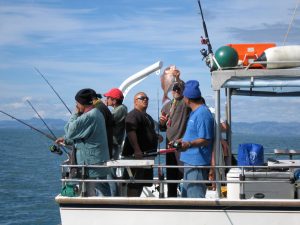
Two important surveys are under way to measure harvest by marine recreational fishers. LegaSea encourages you to cooperate with the researchers if they phone you or approach you on the boat ramp. Over the next 12 months NIWA will be measuring and counting fish landed by recreational anglers at popular boat ramps. This large-scale survey ... Read more.
 October 26, 2017
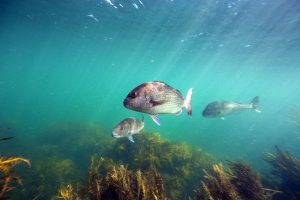
A question we hear every year Spawning success depends on a range of environmental factors ranging from the weather to water temperature or even just the currents. These factors can hugely influence the spawning success. Research indicates a season with warmer waters may increase the survival of these eggs and juvenile snapper by 10-20 times. ... Read more.