
The Fisheries Reform Scam!
The Fisheries Amendment Bill is currently before Parliament. The new Bill includes a multitude of proposals that threaten the future of our fisheries, including removing commercial size limits on species like kingfish and snapper and transferring more power to the Minister when making catch decisions.
The Bill will shortly be going to Select Committee where it will be open to public consultation. Only then will we have a say. From that moment until the general election, LegaSea will be fighting tooth and nail to stop this Bill becoming law.
The changes are not a reform. They are a scam.
Submissions for the first round of public consultation CLOSED on Friday 11 April 2025.
Click here to view our comprehensive record of process and timeline.
We encourage you to read the New Zealand Sport Fishing Council and LegaSea’s joint 2025 submission, opposing the so-called “reform” proposals here.
Why this matters
Significant changes to the Fisheries Act have been proposed yet they are branded as mere ‘reforms’. Don’t be fooled. The changes will not improve the management of our fisheries. They represent a fatal weakening of the Fisheries Act to allow for more fish to be caught and exported. Anyone with an interest in the marine environment ought to be concerned. The time for action is now.
If there’s insufficient public opposition, the amendments could become legislation and there will be serious consequences for our fish and the marine environment.
👉 More decision-making power for commercial operators – The government wants to allow quota owners to voluntarily stockpile catch entitlements instead of reducing catch limits when fish stocks are struggling. That means more fish taken out of the water in the long run, regardless of the state of the fishery.
👉 Weakening environmental protection – The new proposals seek to delay catch reductions in a depleted fishery due to the impacts the cuts might have on commercial fishers. This incentivises overfishing of a depleted fish stock. The Government also seeks to silence recent High Court rulings that have ruled the Minister must consider the impacts of fishing on the wider marine environment when setting catch limits.
👉 Less monitoring – Remember those onboard cameras that finally started catching commercial fishers throwing fish overboard? The ones that proved reported discards of undersized snapper shot up over 1000% once cameras were live? Yeah, Jones wants to let commercial operators switch them off at times. And if that wasn’t bad enough, he’s also restricting public access to footage, so we won’t even be able to see what’s really going on.
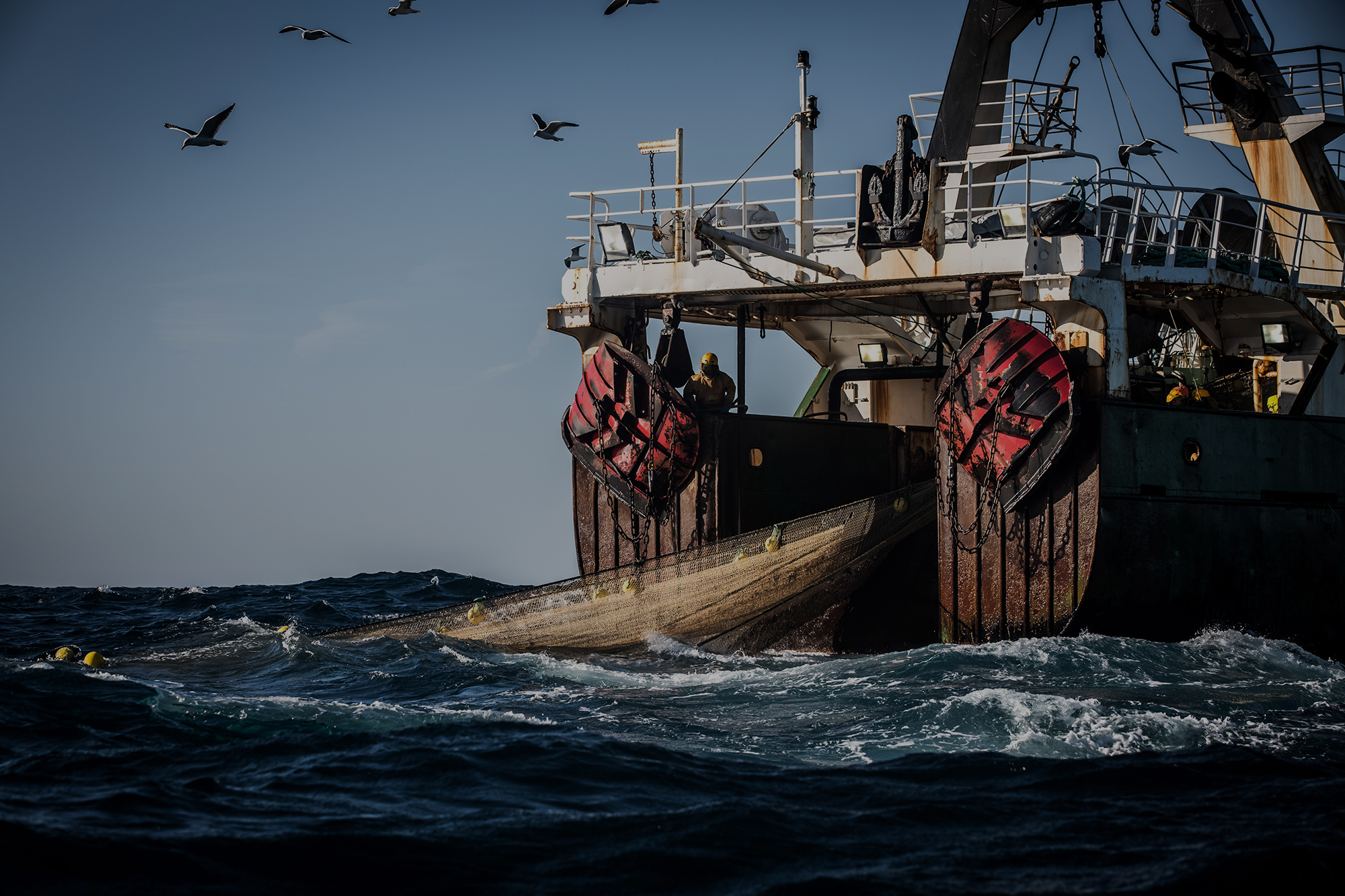
👉 More wastage – Under the new proposals, commercial operators would be allowed to toss even more fish overboard. That means more dumping, more high-grading (where only the best fish are kept, and the rest are discarded), and more damage to our fisheries. Since cameras were introduced on some vessels, reported kingfish discards increased by 950%. Snapper? Over 1000%. This is proof that we need stronger rules, not weaker ones.
👉 Reducing public input – Under these changes, Minister Jones wants to set catch limits for up to five years at a time—with only one chance for public consultation. This is a dream scenario for commercial quota holders but a nightmare for sustainability. The government wants to lock in catch limits based on self-reported data from the fishing industry.
These proposals are reckless and short-sighted. They remove critical checks and balances that safeguard our marine environment. With your support, we can show the government that Kiwis won’t stand by and let this happen.
The changes are not a reform. They are a scam.
These proposals are the first raft of amendments that signal significant changes to our fishing future and jeopardise the health of our marine environment. Our access to a healthy and abundant fishery is on the line. Don’t let it be cut.
We need thousands of people to speak up. It will take less than 5 minutes to make a submission using LegaSea’s online form. Tell the Minister you reject the privatisation of our fisheries.
Want to do more?
- Subscribe – Hook your mates in to receive LegaSea newsletters to stay updated.
- Share the submission form with your friends, family and neighbours, encouraging them to make their voice heard.
- Donate – We need all the support we can get to maintain this advocacy, please pitch in and make a one-off donation or become a LegaSea Legend starting at just $20 a month.
FAQs
How can we stop the proposed reforms to the Fisheries Act?
The Amendment Bill is due to go to the Select Committee in March 2026. This will be our only chance to make our voice heard and stop these changes from becoming law. Subscribe to receive LegaSea Newsletters and keep up to date when the Amendment Bill is released. Be ready to speak up before it’s […]What are LegaSea’s main concerns with the proposed reforms to the Fisheries Act?
Removing statutory safeguards against overfishing and environmental harm. Commercial interests will be able to make decisions on catch limits, when and how fishing occurs. Weakened environmental protections. Decision-makers could legally ignore the broader impacts of fishing on the public or the marine environment when setting catch limits, putting marine health at greater risk. Less monitoring […]What is the “Reform Scam”?
It’s a scheme developed by the commercial fishing industry and the Minister for Oceans and Fisheries to shift more power into the hands of commercial quota owners and weaken safeguards designed to protect our fish. In February 2025 the Minister and industry representatives proposed a package of changes to the Fisheries Act. The ‘reform’ package […]Will the reforms to the Fisheries Act make seafood cheaper to buy?
No, it merely reduces costs for quota owners while the public bears the cost of environmental degradation. The majority of our seafood in New Zealand is exported overseas on average for less than $6 a kilo (excluding shellfish & crayfish). There are few, if any, fish available to Kiwis at this price. (Source – Seafood […]Why should the public be able to challenge fisheries decisions at all?
Because the fisheries resource belongs to all New Zealanders. Judicial review is a fundamental part of the decision-making process, available to all New Zealanders. It allows for expert, independent oversight by judges who can review decisions and how they compare to the law. It’s a basic accountability mechanism that ensures decisions follow the law and […]Why does the Minister want to limit the public’s ability to challenge fisheries decisions?
Court scrutiny has historically played a critical role in holding Fisheries Ministers accountable to the purpose of the Fisheries Act. The Minister must ensure sustainability and protect the wider marine environment when making fisheries decisions. Recent High Court decisions involving crayfish, tarakihi, and the protection of hoiho (yellow-eyed penguins) have all reinforced the Act’s purpose. […]Does the deemed value penalty system work?
No. LegaSea and the New Zealand Sport Fishing Council have submitted many times that the deemed value system is not working. It’s not fair on smaller operators if larger operators, who hold a lot of Annual Catch Entitlement (ACE), will not release it. This encourages dumping, which is not good for the small-scale operator, nor […]Why is reducing deemed value penalties a problem?
Deemed value penalties are supposed to be a deterrent to prevent commercial fishers from exceeding lawful catch limits. If these penalties are reduced, it will encourage ongoing catches beyond sustainable limits, weakening protections for fish stocks. The cost of commercial fishers catching more than they are legally allowed would instead be treated as an acceptable […]Does the money from deemed value penalties get reinvested into managing our fisheries?
No. The money collected from deemed value penalties goes into the Government’s Consolidated Fund. There is no requirement that deemed value revenue is reinvested into fisheries management expenses such as enforcement, monitoring, stock assessments and fisheries science.Supporting information:
Media Releases
- Fisheries reforms prioritise Industry over public interest – 14 February 2025
Articles
- Officials flag risks in Jones’ bid to cut penalties for deepwater fisheries – Newsroom, 23 Jan 2026
- Shane Jones plans bycatch rule shake-up to cut costs for deepwater fishers – Northern Advocate, 16 Jan 2026
- Fisheries Ministers’s constraint on court challenges ‘restrictive’ – officials – Newsroom, 27 Aug 2025
- Government agrees to pro-industry fisheries changes – NZ Herald, 6 Aug 2025
- Fishing industry nets changes to cameras, discards and catch restrictions – Newsroom, 6 Aug 2025
- Reforms to allow greater catch limits, on-board camera footage to stay hidden – Radio NZ, 6 Aug 2025
- Privatisation proposals shrouded in weasel speak – LegaSea, 11 March 2025
- Public loses out on fisheries deregulation – LegaSea, 25 Feb 2025
- Shane Jones Fisheries Reforms Prioritise Industry over Public Interest – LegaSea, 12 Feb 2025
Newsletters
- The reform scam returns – and it still stinks – 6 Aug 2025
- Shane Jones is an Island (and not a healthy one) – 20 March 2025
- Introducing the Fisheries Reform Scam – 12 March 2025
- Nothing to see here – Jones Threatens To Reduce Transparency – 5 March 2025
- Public fish, private profits – who does Shane Jones really serve? – 24 Feb 2025
More Information:
- A 2024 Ministry for Primary Industries report revealed a staggering 46% increase in fish being tossed overboard after cameras went live on a portion of the commercial vessels. The report shows that cameras are effective at incentivising improved reporting.
- Discards of kingfish have increased by 950% compared to what was previously reported.
- Discards of snapper have increased by over 1000% compared to what was previously reported.
- Reported dolphin captures were up by 680% times and albatross interactions by 350%.
- A 2019 Horizon Research study found 58% of New Zealanders thought bottom trawling that destroys fish habitats and targets small fish in the inshore fishery should be banned.
- The same Horizon Research study found 70% of New Zealanders believed that fisheries needed to be reformed to ensure there is an abundant fishery. Not to deregulate the controls on commercial fishing.
- Two Ministry for Primary Industries research projects, from 2016 and 2021, cover the operation of cameras to monitor catches aboard commercial fishing vessels. Reviewing 100% of all catch sorting and stowing for all vessels is not humanly possible. There are limitations. Even with AI there is no way to determine from the camera footage the exact size of fish or weight of a bin of fish.Even with cameras, management will need to rely on trust and the self-reported data provided by commercial fishers. Until technology and placement improves, cameras are no substitute for onboard human observers. Current rates of observer coverage of inshore commercial fishing activity is poor.
- Pria, M.J.; Pierre, J.P.; McElderry, H.; Beck, M. (2016). Using Electronic Monitoring to Document Snapper Discards and Validate Catch effort Data.
New Zealand Fisheries Assessment Report 2016/57. 38 p. - Middleton, D.A.J.; Guard, D. (2021). Summary and evaluation of the electronic monitoring programmes in the SNA 1 trawl and bottom longline fisheries.
New Zealand Fisheries Assessment Report 2021/37. 69 p.
- Pria, M.J.; Pierre, J.P.; McElderry, H.; Beck, M. (2016). Using Electronic Monitoring to Document Snapper Discards and Validate Catch effort Data.
- A 2016 study found the total economic contribution of marine recreational fishing by residents and visitors was $1.7 billion per annum, while taking less than 6% of the national catch. Recreational fishing contributes a conservative $188 million in tax revenues to help keep New Zealand functioning, while generating full-time employment for over 8,000 people.
- Holdsworth, J; Rea, T; Southwick, R. Recreational Fishing in New Zealand – A Billion Dollar Industry. Produced for the New Zealand Marine Research Foundation. March 2016.
Related articles
LegaSea newsletter #184 – If you thought killing baby snapper was bad…
MEDIA RELEASE: Fisheries Bill Still Not Dead
LegaSea newsletter #183 – We need your help to Kill the Fisheries Amendment Bill
LegaSea newsletter #182 – The Reform Scam is back
Kiwis Aren’t Buying the Government’s Fisheries Reform Package
Fast-tracking marine depletion while silencing our voices
LegaSea newsletter #181 – Fines, closures and coffee. What a mix
A fine is meant to change behaviour. At sea, that principle is being abandoned.
LegaSea newsletter #180 – I fish. I care. I vote.