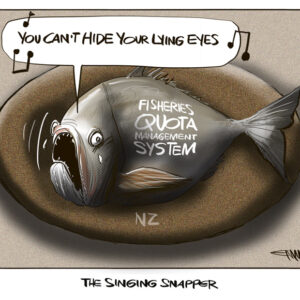

The Quota Management System (QMS) turns 40 this year. Join us as we break down some of the key failures of the QMS and why we think it’s time it was replaced with something more innovative.
When did you last buy fresh fish straight off the boat, from the person who caught it? In a country surrounded by sea, water-to-wharf-to-plate ought to be an everyday experience. In 2026, it’s a rarity.
Rare because many local fishers are extinct and fishing operations in small ports and regional communities have closed. Business has moved closer to the cities where the fish are processed and exported. This is a result of 40 years of the Quota Management System (QMS).
The landlord model
Today, many of the remaining inshore fishers are dependent on leasing catching rights, known as Annual Catch Entitlement (ACE), from quota owners who never go to sea: slipper skippers.
These slipper skippers demand the catch and determine the port price paid to the fisher. Some fishers report receiving just $4 a kilo for snapper that sells in shops for more than $50 per kilo.
High lease costs and low port prices force a numbers game: catch as much as you can, as cheaply as possible. For ACE fishers, this makes it hard to earn a living wage from long lining and selling fish locally.
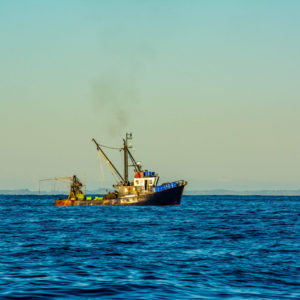
The system rewards volume over value. That’s why low-cost, destructive bulk harvesting fishing methods such as bottom trawling have become the norm.
Iceland introduced a quota system about the same time as New Zealand, and the same pattern arose. The difference is that Iceland responded. They set aside catching rights for small-boat, low-impact coastal fishing, thereby supporting the long-term health of fish stocks and keeping regional communities alive.
In Aotearoa, some quota owner-operator families have done well under the QMS. We want more families to succeed in fishing. We need a system that respects the fish and benefits those on the water doing the hard mahi.
We would all benefit from an alternative system that encourages small-scale, artisanal fishers to sell fresh fish locally, at an affordable price.
Want to learn more? Look out for our article next week as we dive into more reasons why the QMS ought to be replaced with a more innovative system.