Marine Environment FAQs
All FAQs |
Customary Fisheries | Fisheries Management | maximum sustainable yield | QMS | Economics | Fishing | Rescue Fish | Environment | Fishing methods | Recreational Fishing | Fishcare | customary | Kahawai | Reform scam | Baitfish | Scallops | Crayfish | WRC decision | Marlin | Reef fish | Deemed value penalties | Judicial Review | Kill the Bill | Tarakihi | Release mortality | Election | Politics | Bottom trawling
 November 29, 2019
Prime fishing areas in the Bay of Plenty have been targeted for closure and LegaSea along with local fishers are pushing back. The closures of some reefs and islands in the area around Motiti are supported by Court decisions, although subject to appeal. The New Zealand Sport Fishing Council has registered as an “interested party” ... Read more.
 November 20, 2019
In the Bay of Plenty we don’t have to look far for evidence that the Quota Management System is not working. LegaSea is concerned that the failure of the QMS is having major consequences. Moreover, the inaction by Fisheries New Zealand and the Minister of Fisheries Stuart Nash to address the serious issues of depletion ... Read more.
 November 15, 2019
There is a growing call that the Quota Management System has to go. It is not fit for purpose because it is not delivering on its goals of resource sustainability and economic efficiency. Our fisheries managers need to start applying the environmental and precautionary principles in the Fisheries Act 1996 otherwise Regional Councils will step ... Read more.
 November 10, 2019
In the same week that our Prime Minister is explaining the Maori concept of kaitiakitanga, guardianship, to the United Nations her fisheries Minister is at home setting catch limits way too high for some fish stocks. Stuart Nash announced his decisions for 20 fish stocks four days before they were due to come into effect ... Read more.
 November 5, 2019
There are a lot of things people did in the 1900s that are not acceptable today. One of those unacceptable behaviours is bottom trawling in inshore waters. Science shows us that bottom trawling catches fish indiscriminately and it impacts on the seabed, killing the three dimensional structure that supports essential organisms. Those organisms attract small ... Read more.
 November 5, 2019
In 2017 MPI openly admitted that bottom trawling and dredging are the most destructive fishing methods, causing damage to seabed habitats and reducing the density and diversity of the species that live there. So why is trawling and dredging still permitted inshore? Mitigating the effects of fishing on the marine environment is a core function ... Read more.
 October 30, 2019
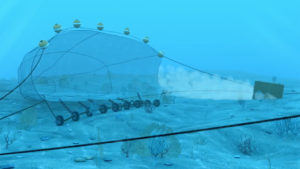
Bottom trawling is an industrial fishing method that involves dragging a large, weighted net along the seafloor with the intention of mass collection. In this short video, Dr Simon Thrush, a marine scientist from Auckland University, discusses how bottom trawling works and why it is so destructive. LegaSea believes bottom trawling needs to be stopped ... Read more.
 August 6, 2019
Dining at a food court in the city guarantees a range of flavours and types of food to suit your appetite. On the dark side, at some of these eateries there are small fish legally available for sale. Often these fish are surrounded by a tasty sauce and gleefully consumed by hungry customers with little ... Read more.
July 15, 2019
Anyone fishing from shore knows that it’s a tough gig. So many elements such as the tide, wind, and swell have to be right before you even get your line wet. As fish stocks decline so do your chances of success. Some days it comes down to a choice between buying burley to increase your ... Read more.
 May 15, 2019
New Zealand’s leading environmental organisations have today joined with recreational fishers to call on the Government to ban bottom trawling on seamounts. The Deep Sea Conservation Coalition (DSCC), ECO, Forest and Bird, Greenpeace, LegaSea and WWF-New Zealand are urging the public to sign a petition to the Minister of Fisheries, Stuart Nash, and the Minister ... Read more.