Crayfish nationwide FAQs
All FAQs |
Customary Fisheries | Fisheries Management | maximum sustainable yield | QMS | Economics | Fishing | Rescue Fish | Environment | Fishing methods | Recreational Fishing | Fishcare | customary | Kahawai | Reform scam | Baitfish | Scallops | Crayfish | WRC decision | Marlin | Reef fish | Deemed value penalties | Judicial Review | Kill the Bill | Tarakihi | Release mortality | Election | Politics | Bottom trawling
 March 31, 2017
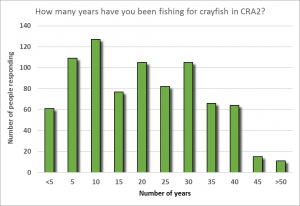
New Zealand Sport Fishing Council March 2017 Between January and March 2017 a survey was conducted to measure people’s perceptions of the state of the rock lobster (crayfish) fishery on the northeast coast of the North Island, known in management terms as CRA 2. Over 800 responses were received, with many respondents having dived or ... Read more.
 March 20, 2017
A landmark survey of people who pot and dive for crayfish on the northeast coast between Pakiri and East Cape defies Ministry for Primary Industries’ assurances that the fishery is doing well. More than three quarters (78.6%) of the 822 survey respondents described the size and availability of crayfish in this popular fishery as 1 ... Read more.
 March 3, 2017
LegaSea has responded to the Ministry for Primary Industries’ annual review of rock lobster sustainability measures. The MPI discussion paper proposed the following changes to the Total Allowable Commercial Catch from April 1st this year: 9% decrease to the commercial catch level in CRA3 (East Cape, Gisborne) 23% or 27% reduction to the commercial catch ... Read more.
 December 6, 2016
In late September the Ministry for Primary Industries asked for public feedback on the health of the crayfish stock in the Gisborne area, officially referred to as CRA 3. There are mixed views on the stock status. Commercial interests, the Ministry, and scientists all advocate the fishery is in fine fettle. Meanwhile, for people around ... Read more.
 September 29, 2016
Crayfish numbers are so low in the Hauraki Gulf and surrounding northeast coast that University of Auckland researchers are referring to them as “functionally extinct”. This means they are no longer fulfilling their role in the marine ecosystem. This is dire news for both the environment and the public. In 2014 the New Zealand Sport ... Read more.
 April 25, 2016
A central theme to the four recent management submissions to the Ministry for Primary Industries is the need for more precautionary management of our fish stocks. The Minister’s decisions, announced on March 17th, are a mixed bag, with cuts to commercial catch limits for selected scallop and crayfish stocks, and significant increases in surf clam ... Read more.
June 26, 2015
There are two outcomes from the recent crayfish management review process; both are bad news for non-commercial interests. Firstly, the Minister followed industry advice to maintain or increase commercial catch limits, and secondly, that under the current regime we are unlikely to see a rebuild of crayfish numbers along our coastline any time soon. Amongst ... Read more.
 March 28, 2015
There are ongoing issues related to the management of our crayfish stocks that need to be addressed this year. Crayfish are a prized shellfish, a taonga, and we need to be sure that the public’s long-term interests are protected and we have reasonable access to our crayfish. In our recent submission responding to the latest ... Read more.
March 1, 2015
Crayfish might not be on everyone’s catch list but they are a treasured meal when shared with family and friends. Not surprisingly they are also a valuable commercial species so when it comes to management there is always high interest in any catch increases. Management of five crayfish stocks is under review. These stocks extend ... Read more.
 January 30, 2015
Crayfish are a prized catch and important ecologically so it is critical we protect the fishery from over-exploitation. The Ministry for Primary Industries has just issued proposals for the future management of several fisheries, including the northern crayfish stock called CRA1. LegaSea again objects short consultation timeframes, this time we only have 18 working days ... Read more.