Dredging FAQs
All FAQs |
Customary Fisheries | Fisheries Management | maximum sustainable yield | QMS | Economics | Fishing | Rescue Fish | Environment | Fishing methods | Recreational Fishing | Fishcare | customary | Kahawai | Reform scam | Baitfish | Scallops | Crayfish | WRC decision | Marlin | Reef fish | Deemed value penalties | Judicial Review | Kill the Bill | Tarakihi | Release mortality | Election | Politics | Bottom trawling
 October 29, 2025
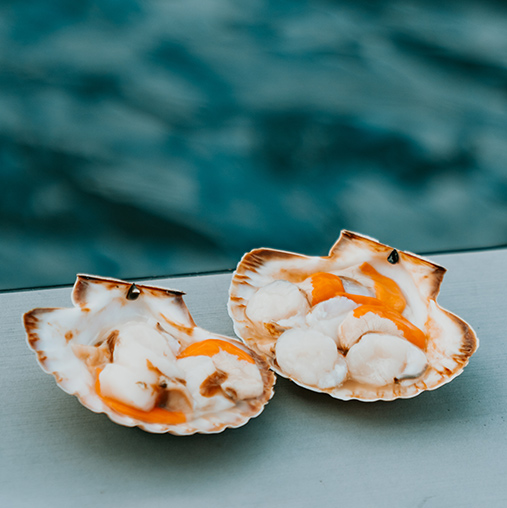
This article was originally published in Local Matters. 28 October 2025. It’s hard to believe it’s been three years since we were last able to gather and savour fresh scallops from our own backyard. For many of us, sharing a feed of scallops was woven into our coastal lifestyle, connecting friends and family. Decades of ... Read more.
 December 30, 2024
What does a Highly Protected Area and a closed scallop fishery have in common? Both signal that New Zealand’s fisheries management is failing, and you are paying the price for that failure. The consequences of poor management are restrictions on your ability to catch scallops or fish for your family. In our last two articles ... Read more.
 November 10, 2024
Be prepared to take action when you hear about Fisheries New Zealand’s latest industry-led decision to drag a dredge across Coromandel scallop beds – ironically to survey how many scallops are alive. These are the same scallop beds that have been indefinitely closed to commercial and public fishing since March 2023. So it’s hard to ... Read more.
 October 11, 2024
Coromandel locals are horrified that Fisheries New Zealand is currently dragging a destructive industrial dredge through the local scallop fishery that has been closed due to depletion since March 2023. “There has been overwhelming community support for the closure of the local Coromandel fishery because scallop numbers were the lowest we’d ever seen. After all ... Read more.
 November 22, 2023
People are a vital part of the marine ecosystem. We have the ability to influence changes in both positive and negative ways. Conventional marine protection separates us from the environment, creating a disconnect between people and conservation efforts. In contrast, traditional techniques acknowledge the power that comes with engaging communities and believe people are a ... Read more.
 November 22, 2023
The goal of marine protection is to help enhance and protect ecosystems for future generations. Our children’s children deserve to enjoy an abundant and diverse Hauraki Gulf. Marine reserves were initially created for scientific purposes, not as a fisheries management tool. So, how can we expect them to solve depleting abundance and declining biodiversity? Effective ... Read more.
 November 19, 2023
A battle is being fought between prioritising the health of the Hauraki Gulf Marine Park for future generations and degrading the seafloor for the short term gain of commercial interests. Fisheries New Zealand (FNZ) originally planned to close public consultation on the proposed ‘trawl corridors’ on 6 November. Four options were presented, all allowing for ... Read more.
 November 13, 2023
It’s staggering to realise that the Hauraki Gulf Marine Park was established in 2000 to protect this maritime jewel for the benefit of the community, yet 23 years later it has become more degraded. The scallop fishery is closed, the crayfish population is described as functionally extinct, the invasive Caulerpa seaweed is spreading, and mushy ... Read more.
 October 27, 2023
The Hauraki Gulf is more degraded now than when it was first established over 20 years ago. Over a century of damage caused by bottom trawling, followed by Danish seining and dredging, can be addressed by you saying no to this ongoing destruction. Most of us agree that a healthy marine environment is good for ... Read more.
 October 22, 2023
It’s fair to say the Hauraki Gulf Marine Park is turning to shit. Quite literally. Hundreds of litres of raw sewage entered the Waitematā Harbour every second after a 13-metre sinkhole caused the blockage of a main wastewater pipe in downtown Auckland. Do you think a marine reserve would be an effective way to solve ... Read more.