
Article originally published in Fishing in Godzone magazine, April 2026.
The Coalition government has made a serious mistake in backing the Minister for Oceans and Fisheries’ most sweeping changes to fisheries legislation in the past 40 years. Kiwis are outraged. And rightly so.
More than 25,000 New Zealanders rejected the proposed changes to the Fisheries Act in April last year. That’s the largest public response ever seen on a fisheries issue in recent times. It proves that Kiwis care deeply about the future of our fisheries.
Yet Minister Shane Jones has pushed ahead regardless, ignoring our concerns. Advancing a Bill that is by the Minister’s own admission, a quota owners wishlist that prioritises exploiting and exporting our fish for private profits. The Select Committee will now consider whether the Bill stands, is changed or thrown out. We’ll know that outcome by 30 September 2026.
The Minister wants the Bill enacted before the election. We don’t.
Subsidising commercial operators and fast-tracking commercial fish harvest at the expense of the marine environment, the fish, and our future is not a winning strategy.
Anyone who has spent decades out on the water knows there aren’t enough fish. The problem is, the Amendment Bill will not resolve the depletion issue. Instead, the Bill attempts to normalise depletion.
Rotten to the core
What’s wrong with the Fisheries Amendment Bill? Plenty.
Right from the outset, the intent of the Bill is clear – “…to deliver on Government priorities to grow the value of seafood sector exports while continuing to ensure sustainability.” Immediately, the public interests and the environment are demoted to the second tier.
There is nothing in this Bill that meaningfully addresses the issues of importance to everyday New Zealanders – sustainability for future generations, depletion of fish, destructive fishing methods impacting the environment, and people’s ability to fish to feed their family and friends.
The Minister has told us this is about modernising fisheries management, streamlining decision-making, and improving sustainability. Those are reasonable goals. What we cannot accept is a Bill that pursues those goals by removing the safeguards that ensure accountability. Not acceptable.
Public outrage
Upon reviewing the Bill, we were shocked to find new proposals that were not previously consulted on in 2025. One which immediately rang alarm bells was the removal of commercial minimum size limits for certain species including snapper, tarakihi and trevally. This would mean commercial operators can keep and sell baby fish before they’ve had the chance to reproduce. Just plain wrong.
The public were quick to understand the risks and vocalise their concerns. Less than a week after the Bill’s release, Prime Minister, Christopher Luxon succumbed to public pressure, announcing this change would be scrapped at the Select Committee stage.
This demonstrates the power of public pressure. But the fight is far from over.
If you thought killing baby snapper was bad…
Buried within 70 pages of legal jargon are further changes to the Fisheries Act that seek to take fish from the public and hand more control to commercial interests.
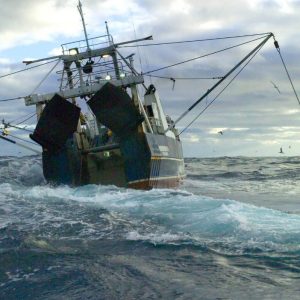
The Bill opens the door to more waste. It legalises more dumping of unwanted dead fish overboard on commercial bottom trawlers. Fish that could’ve been left swimming in our waters will instead be wasted, all in the name of reducing “unnecessary costs” for commercial operators.
Legalising dumping and discarding undermines any incentive for fishers to transition to more selective fishing methods. Transitioning is a sensible move to sustaining our fish populations over the long-term.
The Minister also wants to shut us out from having a say in changes to commercial catch limits for up to five years. We only get a say in year one. This means less oversight and less accountability.
A lot can change in five years. The marine environment is dynamic and doesn’t operate on political timelines. Depletion creeps up on you. You don’t realise things have changed until they are much worse and there’s not even enough fish to feed the family after a day’s fishing.
Even now we can’t gather crayfish from Northland, the scallop fishery is closed, and where have our john dory gone?
We don’t want families waiting up to a decade for corrective management changes to be applied. By then the kids have grown up and lost their fascination with fishing and spending time with us on or near the water.
If we disagree with a Ministerial decision, the public will only have 20 working days to legally challenge fisheries decisions.
This change follows recent High Court decisions on crayfish, tarakihi, and the protection of hoiho (yellow-eyed penguins) which confirmed the Minister must take genuine, precautionary steps to protect fish stocks and marine ecosystems from overfishing and long-term damage. The Government has responded to these rulings not by making lawful decisions, but by closing the courthouse door. That is not law reform; it is self-insulation.
What now?
To our disappointment, at the end of March a majority of MPs agreed to proceed with the Amendment Bill. The Bill has been referred to the Primary Production Select Committee. This will be the last stage that we can submit and influence MPs to make meaningful changes to the Bill before it becomes official legislation.
The Select Committee needs to hear our voices. More than 25,000 Kiwis spoke up last year and now we need to do it again, this time louder.
Click here to make a submission using LegaSea’s online submission template.
LegaSea and our aligned partners will be fighting tooth and nail to Kill the Bill. Join us in keeping the pressure on our politicians to stand up for healthy fisheries, for our kids and theirs.
We do not accept a future where Kiwis are left with the leftovers of a degraded marine environment and a broken quota management system. We say Kill the whole Bill. Now.