
Article originally published in Fishing in Godzone magazine, May 2026
What do we want? To kill the Fisheries Amendment Bill. When do we want it? Now.
In April and May, more than 30,000 concerned Kiwis made their submission opposing the Bill. “Corrupt”, “rotten” and “shocking” were just some of the words that were used to describe the Bill and not without reason. Shane Jones’ Bill seeks to prioritise seafood exports ahead of our ability to catch a feed and enjoy a healthy and abundant marine environment.
If the Bill becomes legislation, future generations won’t inherit thriving fisheries; they’ll inherit the leftovers of a degraded marine environment.
LegaSea, alongside the New Zealand Sport Fishing Council, NZ Angling & Casting and NZ Underwater have compiled a comprehensive submission rejecting the Amendment Bill outright. We exposed its deep flaws and stood up for what’s best for our fisheries and the interests of all New Zealanders.
Recent Horizon Research polling showed that more than 50% of New Zealanders want the Bill to be withdrawn immediately to allow for more consultation with the public.
Until November, we need to keep the pressure on our politicians to listen to the people and stop the Fisheries Amendment Bill dead in the water.
We are in a crisis
To put it bluntly, we are in a crisis of depletion.
Shane Jones, the Minister for Oceans and Fisheries, deputy leader of New Zealand First, and the driving force behind the Bill, claims it will improve efficiency by cutting costs for commercial fishers.
But that claim avoids the uncomfortable truth that efficiency isn’t declining because of what the Minister refers to as unnecessary “red tape”. It’s declining because there are fewer fish. When fish are scarce, it takes more time, more fuel, more effort and larger nets to catch fish.
As recreational fishers, we can recognise that a day’s fishing no longer guarantees a feed for the whānau. Fishing for scallops and crayfish is now off the table in some areas and there is a proliferation of closed areas as mana whenua and communities try to address localised depletion and rebuild what’s been lost.
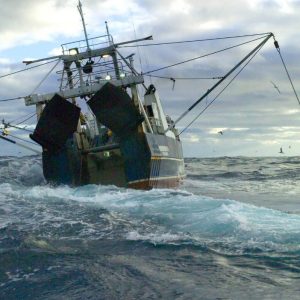
As fish become scarcer and fuel costs rise, indiscriminate and destructive fishing methods such as bottom trawling become the most economically efficient way to fish commercially, as they scoop up everything in their path.
Instead of tackling the root problem of declining abundance, the Minister’s solution is to change existing legislation to make it easier and cheaper to harvest a treasured public resource – our fish.
That’s not reform. That’s doubling down on failure.
True reform comes from restoring abundance. More fish in the water means fish will become easier and cheaper to catch using more selective fishing methods. Fuel costs will decrease and outcomes improve for everyone, including commercial, recreational and customary fishers alike.
Removal of environmental safeguards
The Fisheries Amendment Bill doesn’t just normalise depletion; it will make it worse by failing to defend fish stocks against overexploitation or support the ecosystem upon which they depend.
Right now, when a Minister sets catch limits, they are legally required to consider the full effects of fishing on the wider marine environment, not just the fish they are targeting.
The proposed amendments remove this obligation.
Instead, decisions would be limited to a narrow list of “standard factors” – deliberately shrinking the scope of environmental consideration so commercial catch limits could increase while environmental damage continues.
There will be no requirement to consider localised depletion and the impacts of fishing on the wider marine environment.
Undermining environmental safeguards undermines the future of the fishery itself. That’s because if we want healthy and abundant fish populations, we must have healthy habitats.
Many of our fish stocks have little to no information on the status of their population or whether they are overfished. Under the current Fisheries Act, the Minister is obliged to take a precautionary approach when making decisions for such fish stocks with limited data.
The Bill will instead encourage the exploitation of vulnerable, data-poor fish stocks.
A reform is a change for the better. A reform that increases risks to ecosystem function and productivity for no tangible benefit is not a reform at all.
Current legislation is fit for purpose
Born in 1996, the current Fisheries Act is modern, deliberate legislation. It holds decision-makers accountable for considering the interconnected nature of our marine ecosystem and acknowledges that sustainability must come first and foremost.
The current Act is fit for purpose. Recent court rulings on Ministerial fisheries decisions for crayfish, tarakihi, and kahawai show that the law is consistent and clear.
Yet the Minister has convinced the coalition government that the current Act is outdated and widespread changes are required in order to boost the “productivity” of the commercial fishing industry.
The real reason behind the Amendment Bill is to shift control over how many fish remain in the water to quota owners, behind closed doors. It shifts power away from the Minister and strips back public accountability.
The Bill also undermines the core purpose and principles of the Act, to ensure sustainability, have regard to kaitiakitanga (guardianship), and maintain productive fish populations to provide for the foreseeable needs of future generations who will be looking for and needing nourishing food.
Real reform must give effect to the purpose and principles of the existing Fisheries Act so we can restore abundance and diversity in our coastal waters for the benefit of all New Zealanders.
What’s next?
The Amendment Bill is now before the Primary Production Select Committee. The Select Committee will review our submission alongside thousands of others and then report back to Parliament by 6 August with recommendations or changes to the Bill.
The next test will come at the second reading of the Bill later this year. We are relying on the majority of politicians to listen to the people and reject the Bill.
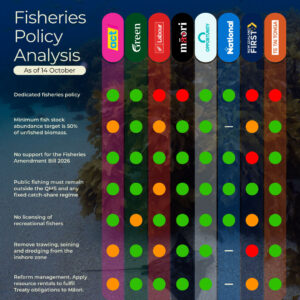
The National Party have promised they will listen to the concerns and won’t support the Bill at its second reading unless there are “significant changes”. ACT has made a similar commitment and Labour also has concerns.
The most significant steps National and Labour can take is to firstly listen to the people; secondly ensure the Select Committee report recommends the Bill is dropped; then reject the Fisheries Amendment Bill during the second reading.
Public pressure is working but the job isn’t done. We need to keep the pressure on politicians as they are responsible for the outcome of this Bill.
A simple email to your local MP is worthwhile, because for the benefit of our kids and theirs, the Bill must be killed.