Conservation FAQs
All FAQs |
Customary Fisheries | Fisheries Management | maximum sustainable yield | QMS | Economics | Fishing | Rescue Fish | Environment | Fishing methods | Recreational Fishing | Fishcare | customary | Kahawai | Reform scam | Baitfish | Scallops | Crayfish | WRC decision | Marlin | Reef fish | Deemed value penalties | Judicial Review | Kill the Bill | Tarakihi | Release mortality | Election | Politics | Bottom trawling
 May 27, 2021
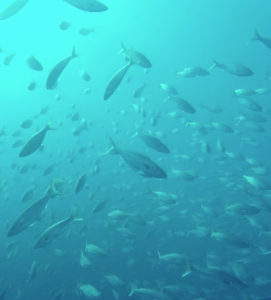
“But to see the kahawai at its best we have to go to New Zealand. There, huge shoals of these fish range the coast and work away up the inlets and rivers. One of these big bodies of fish on the move is a stirring sight.” – Wal Hardy, The Saltwater Angler (1966). Kahawai is ... Read more.
 March 26, 2021
Whether there is a seafloor hardened by rock structures, a seafloor soft and sandy, or a seafloor teeming with coral life, a single pass of a scallop dredge can reduce the total number of creatures on the seafloor by around 60 percent. A countless number of sea creatures use the seafloor as their home or ... Read more.
 March 25, 2021
Years of poor fisheries management by successive governments under the Quota Management System (QMS) has resulted in tarakihi populations along the east coast of both islands falling to just 15% of their original population size. In 2019, the previous Minister of Fisheries responded to this crisis with a token 10 percent cut in commercial catch ... Read more.
 March 18, 2021
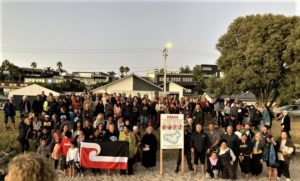
On a cool summer’s morning a crew of 14 from LegaSea were standing on Oneroa Beach, Waiheke Island, watching the sun come up over the crowd gathered to celebrate the start of a rāhui. The rāhui means no harvesting of scallops, mussels, crayfish and pāua within one nautical mile of the Waiheke shoreline for at ... Read more.
 March 7, 2021
As Kiwis we like to think we have it over our trans-Tasman neighbours yet in terms of fisheries management the Queenslanders are beating us hands down. The Queensland government has committed to managing their fish stocks at much higher abundance levels compared to New Zealand. If we don’t follow their lead there will be increasing ... Read more.
 February 25, 2021
This summer people of the Coromandel and Bay of Plenty have taken bold steps to address concerns about the depleted state of local scallop beds. The community and visitors have largely complied with a voluntary ban on taking scallops from Opito Bay on the eastern side of the Coromandel Peninsula, exceeding expectations over the busy ... Read more.
 February 4, 2020
Local Kaitiaki [guardians] held a hui in December to discuss putting a ban on taking mussels from the northern area in the Bay of Islands, until they regrow. Consultation with the local community was largely supportive and now we await a Ministerial decision. LegaSea attended the December hui and expressed support for this initiative as ... Read more.
 January 26, 2020
LegaSea is celebrating the courage of Karl and Sarah Warr from Hawke’s Bay who have installed cameras on their trawler to livestream their fishing activity 24/7. This Napier couple wants the public to see for themselves how their fish is caught. They are hopeful that consumers will start asking their suppliers if the food they ... Read more.
 December 19, 2019
Thanks to a raft of support from many organisations and funders the Kai Ika project is ramping up to a new level. The Kai Ika project is facilitated by LegaSea, the Outboard Boating Club of Auckland (OBC) and Papatuanuku Kokiri Marae. Its success can be attributed to the commitment of all the volunteers involved in ... Read more.
 December 19, 2019
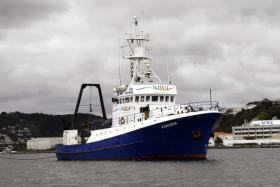
Reports that snapper have been caught in waters around Fiordland and Dunedin have raised a few eyebrows, and the prospect that warming waters may be affecting fish distribution. We don’t know how environmental changes will affect spawning success or how many juveniles will eventually make it to adulthood in these changing environments. In an effort ... Read more.