
Radical. It’s the only word to describe both the proposed changes to fisheries legislation and the growing public opposition to the Fisheries Amendment Bill.
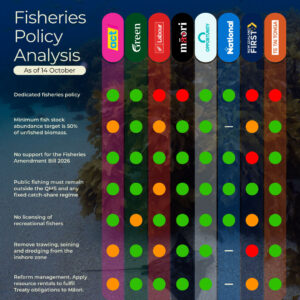
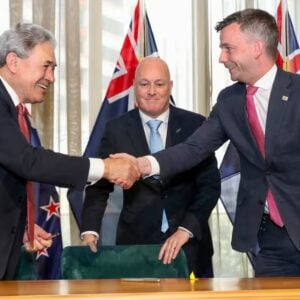
There is increasing concern that the Bill, introduced to Parliament by NZ First’s Shane Jones in March, is another move by the Coalition government to privatise what’s left of our fisheries. New Zealand’s experience of privatisation is enriching investors. The Bill reflects the wishlist of corporate fishing interests.
Proposed changes to legislation were developed by the Seafood Industry Forum and fisheries officials over 18 months. Public interests were not privy to those discussions, so it’s no surprise that the underlying objective is to upgrade commercials’ existing harvesting right to a claim for the fish.
Other concerns include the proposals to lower environmental standards to enable increased commercial catch limits while banning public access to onboard camera footage.
Currently, when the Minister for Oceans and Fisheries Shane Jones makes a management decision he must account for the effects of fishing on the marine environment and all New Zealanders, while ensuring there is enough fish left in the water for our kids and theirs.
If the Amendment Bill becomes law, commercial fishers will be able to decide how much fish they catch this year, how much they might catch next year, and even what fish are kept or thrown overboard. The obligation on the Minister to always meet public expectations and future needs will be discounted.
Handing control of fish and fishing to commercial interests with just a measure of oversight from the chief executive allows the Minister to hide behind closed doors. Not good enough. It’s important the Minister remains publicly accountable for their decisions.
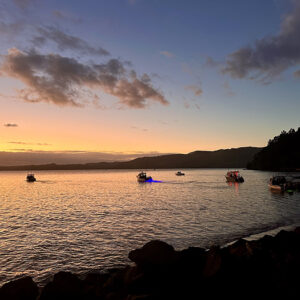
Fish are a public resource and that’s why recreational fishers have fought hard over the past 20 years to defeat the privatisation agenda.
When the Bill was introduced to Parliament in March MPs across the spectrum made commitments to withdraw support for the proposed changes, if the public objected.
National MP for Waitaki and chair of the Primary Production Select Committee considering the Bill, Miles Anderson, was clear where National stand.
“We’re open-minded but we’re not naive. If this bill doesn’t undergo real, meaningful improvements at Select Committee, National cannot support it”.
Northland MP Grant McCallum was similarly clear.
“Some worry their voices won’t be heard, and that we won’t listen. But let me assure you, we will. National will listen. I will listen. Ultimately, if National is not happy with the bill, following the select committee process, we will not support it at second reading.”
A 2025 survey found 70 percent of New Zealanders agree that fisheries need to be reformed to ensure there is an abundant fishery. Further privatisation is a radical departure from what Kiwis want. Let’s hope our politicians are listening. They need to Kill the Bill.
What can you do?
- Make a submission by 29 April – online here.
- Donate to fuel the campaign – count me in.
- Subscribe and tell a mate – sign up to LegaSea here
More information
Video – Introduction of the Fisheries Amendment Bill to Parliament House. 31 March 2026. First Reading.
Fisheries Amendment Bill – online here.
Primary Production Select Committee – details here.
LegaSea’s Kill the Bill campaign – online here.
Survey
Quota Management Survey. For LegaSea. 1027 respondents aged 18+, maximum margin of error +/-3% overall. September 2025. Horizon Research.
Of the respondents who voted in the 2023 election, 70% of all respondents agreed with the survey question: New Zealand’s fisheries need to be reformed to ensure there is an abundant fishery.
| Party vote | Agreed |
| New Zealand First | 63% |
| National Party | 67% |
| ACT Party | 71% |
| Labour Party | 77% |
| Green Party | 86% |
| Te Pati Māori | 95% |